
The Hidden Cost of the Nuclear Family

One of the greatest threats to healthy aging is not medical decline, but the collapse of intergenerational relevance.
For the better part of the last three years, I have been traveling through Japan’s longevity hotspots, meeting people who remain active, independent, socially connected, and purposeful well into their eighties and nineties, long past Japan’s average healthy life expectancy of approximately seventy-three years.
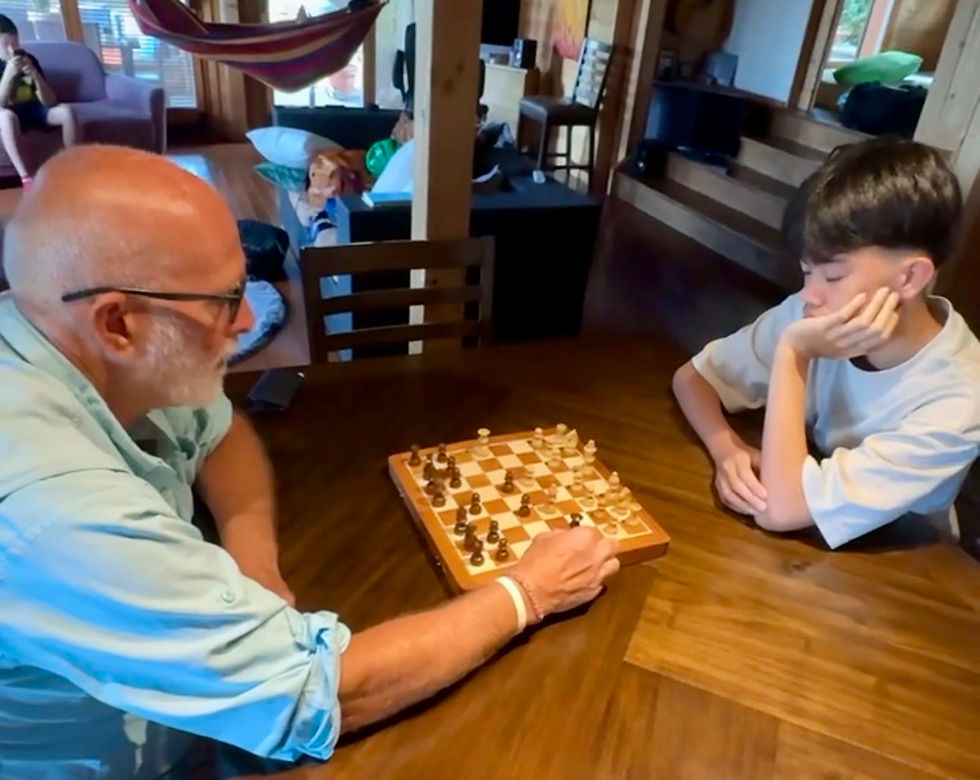
Again and again, I encounter something that is difficult to quantify but impossible to ignore: a strong social scaffolding made up of relationships, obligations, rituals, expectations, memory, and intergenerational connection that appears to help people age with dignity and meaning.
In discussions with my friend and advisor, gerontologist Dr. James McNally, the suggestion emerged that I may actually be documenting the final generation in Japan, formed within that older framework.
To be clear, I am not suggesting that Japan is losing its elderly. The opposite is true, and this demographic reality is well known and frequently discussed in terms of pressure on pension systems, healthcare infrastructure, and the broader economy as the number of retirees grows in comparison to the working population supporting them.
What I am suggesting is something different.
Japan may be steadily losing the cultural architecture that once helped people age well.
Part of the answer, I believe, lies in a philosophical and largely subconscious understanding of time, family, aging, and relationships. Japan, at least historically, has tended toward a far more circular understanding of life, whereas much of the modern West operates within what might be called a linear view of life.
Childhood leads to adolescence, itself a relatively modern concept. Adolescence leads to independence. Independence leads to career and nuclear family formation. Then retirement is marked by a managed decline and, increasingly, by a perceived sense of irrelevance and disengagement in society.
The old gradually move from the center of society toward its margins. Their value becomes increasingly symbolic, sentimental, or medical. We speak often about “taking care” of the elderly. We discuss aged care, retirement planning, mobility support, memory care, and end-of-life comfort.
All of these things matter deeply. Yet beneath much of the discussion often sits an uncomfortable assumption: that the primary role of old age is to be cared for while slowly disappearing. The elderly are frequently separated geographically, economically, and socially from the daily rhythms of younger generations. Many spend their final years in environments optimized for safety and efficiency, but disconnected from broader intergenerational life.

I first raised concerns about this more than twenty years ago in my book Boys Becoming Men, where I argued that the modern nuclear family, while offering certain freedoms and efficiencies, also fractured older communal and intergenerational structures that once helped transmit identity, responsibility, memory, and meaning. The nuclear family can become socially efficient but relationally thin.
In contrast, Japan, and indeed much of Asia historically, developed around a far more circular understanding of family and community. The writer Lafcadio Hearn observed this repeatedly in his writings about Japan more than a century ago.
This is not abstract theory. It is visible in daily life, ritual, family structure, and social expectations. Family is not merely a household unit existing in the present moment. It stretches backward to ancestors and forward to descendants. The dead remained socially present. Memory carries obligation. The elderly retain moral and relational gravity.
One of the clearest expressions of this is the Japanese concept of oyakōkō. The closest English equivalent might be filial devotion or duty toward one’s parents, but oyakōkō extends well beyond simple caregiving. It reflects gratitude, continuity, and an understanding that relationships do not simply terminate because productivity declines.
In many Japanese homes and communities, even after death, relationships continue symbolically through memorial rituals, ancestor altars, grave visits, seasonal observances, and ongoing family responsibility. Life is not viewed simply as a forward-moving line. It is understood as part of a circle.
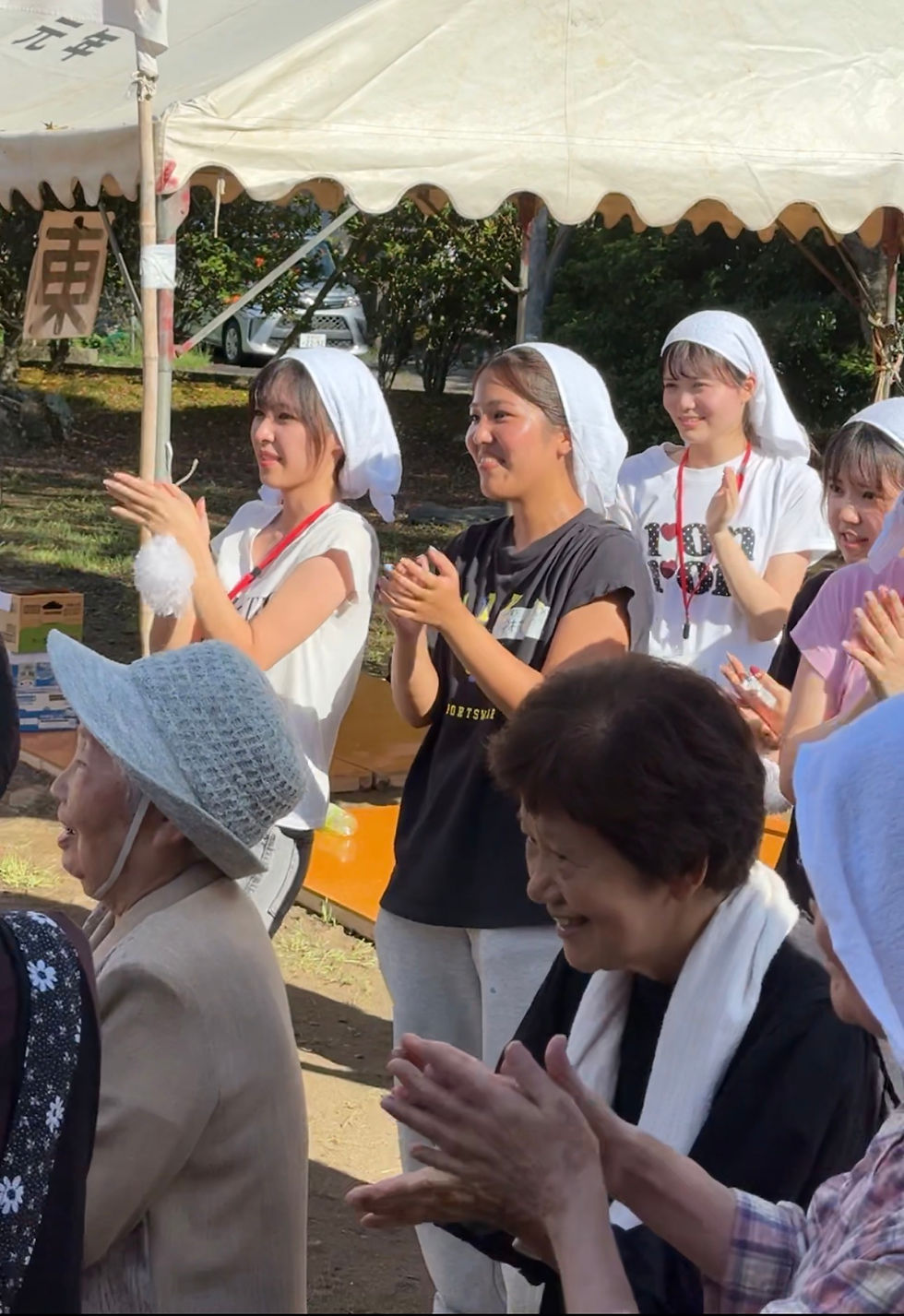
In remote communities, you see this. An elderly barber is still working in his eighties. A woman in her nineties is still gardening and cooking at the bed-and-breakfast she manages with her ninety-seven-year-old husband. Multi-generational gatherings where older people are not merely accommodated, but included. Local festivals where age still carries status rather than embarrassment. These things may appear quaint to outsiders. I do not think they are quaint at all. I think they are functional. Because relevance itself may be one of the hidden engines of healthy aging. Not `relevance` in the corporate sense. Not productivity in the economic sense. But social relevance. Being needed, consulted, and woven into the lives of others.
Yet Japan itself is changing rapidly. Urbanization, declining birth rates, rising numbers of single-person households, economic pressures, Western influence, changing work patterns, and migration to major cities are steadily reshaping family structures. The traditional social scaffolding is weakening. Younger generations increasingly inherit not the circular village model, but something much closer to the globally dominant nuclear family structure.
This is not a simplistic East-versus-West argument. Every society exists somewhere along a spectrum. Traditional Japanese structures could also be restrictive, hierarchical, and suffocating at times. In my upcoming book, Longevity and the Art of Community: Lessons from Japan, I devote an entire chapter to what I call “The Dark Side of Wa.” I have seen the downsides, too.
At the same time, I see the beauty and strength of intergenerational communities in which everyone still has a role within the circle. As societies become more efficient, mobile, and individualized, they may also become less intergenerationally coherent. We may inadvertently create populations that live longer biologically while becoming socially irrelevant earlier.
The deeper question is this: what kind of social architecture helps human beings remain meaningfully human across an entire lifespan? Not simply alive, but connected, purposeful, and woven into something larger than themselves.
Japan does not fully answer that question. No society does. But I suspect that it once held part of the answer, and I worry that part of what made Japan’s super-aging generation remarkable may be disappearing alongside the communities that formed them.
The migration to cities, the rise of single-person households, increasing reports of kodokushi (“lonely deaths”), and the steady normalization of institutionalized aging may all point to the gradual erosion of the older social fabric that once helped people remain socially relevant deep into old age.
These are observations, field notes from my immersive travel to Japan`s longevity hotspots, not final conclusions. It is hard to ignore the possibility that healthy aging is not merely biological. It is profoundly intergenerational.

Lowell Sheppard is a Canadian author, Fellow of the Royal Geographical Society, Special Advisor to the International Academic Forum (IAFOR), founder of HOPE International Development Agency Japan, and founder of the Never Too Late Academy. A long-term resident of Japan, he has spent the past two years traveling through Japan’s longevity hotspots by sailboat, train, bicycle, and on foot, researching the relationship between healthy aging, community, and culture. His forthcoming book, Longevity and the Art of Community: Lessons from Japan, explores why some societies help people remain active, purposeful, and socially connected deep into old age.
Endnotes
1. Japan’s healthy life expectancy data is drawn from the World Health Organization (WHO) and the Japanese Ministry of Health, Labour and Welfare. Japan consistently ranks among the highest-ranking nations globally for both life expectancy and healthy life expectancy, though the gap between lifespan and healthy life expectancy remains substantial.
2. Dr. James McNally is a gerontologist formerly associated with the University of Michigan’s Institute for Social Research and the National Archive of Computerized Data on Aging (NACDA). Observations referenced here emerged through ongoing discussions regarding demographic aging, social structures, and longevity patterns in Japan.
3. Lowell Sheppard, Boys Becoming Men (first published in the early 2000s), examined the decline of communal rites of passage and the fragmentation of intergenerational structures within increasingly individualized and nuclear-family-oriented societies.
4. Lafcadio Hearn documented Japanese communal and ancestral culture extensively in works such as Glimpses of Unfamiliar Japan (1894) and Japan: An Attempt at Interpretation (1904). Hearn frequently contrasted Western individualism with Japanese relational and ancestral continuity.
5. The Japanese concept of oyakōkō (親孝行) is commonly translated as filial devotion or filial piety and refers to moral obligations of gratitude, care, loyalty, and respect toward one’s parents and ancestors. The concept has roots in Confucian ethics and has historically shaped Japanese family structures and intergenerational expectations.
6. The term kodokushi (孤独死), often translated as “lonely death,” refers to people dying alone and remaining undiscovered for extended periods. The phenomenon has become increasingly associated with urbanization, social isolation, aging populations, and the rise in single-person households in Japan. See also: Allison, Anne. Precarious Japan. Duke University Press, 2013.
7. The Japanese concept of wa (和) refers broadly to social harmony, group cohesion, relational balance, and the prioritization of collective stability over individual assertion. While often regarded as a foundational strength within Japanese society, scholars have also noted that strong pressure toward conformity and social consensus can, at times, suppress individuality, dissent, and emotional transparency.
8. Japan’s demographic transition toward smaller households and increased urban isolation has been documented extensively by the National Institute of Population and Social Security Research (IPSS) and Japan’s Ministry of Internal Affairs and Communications. Single-person households now represent one of the fastest-growing household categories in Japan.


