
I was born again at 60. Apparently, it required red underwear.

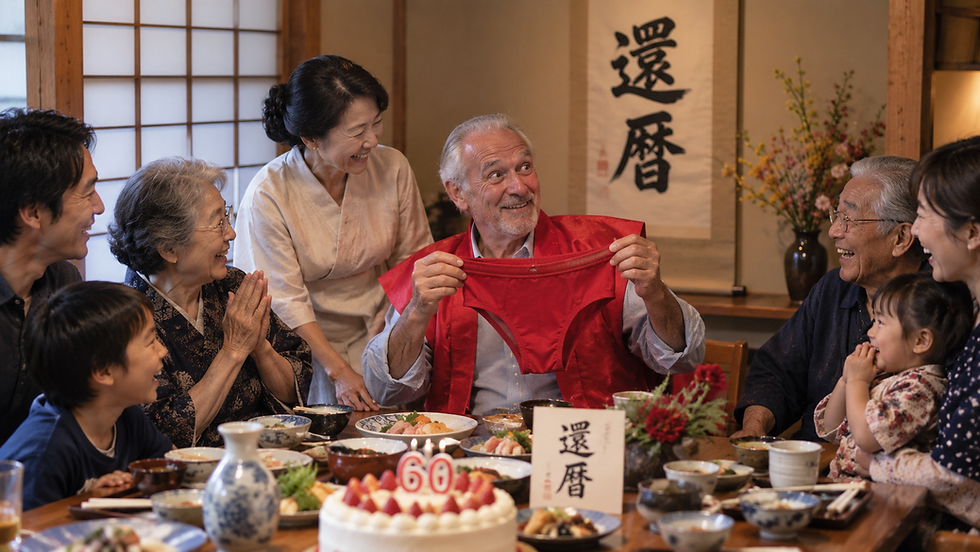
A mischievous neighbor gave me red underwear at my 60th surprise birthday party. At the time, I understood very little about kanreki, the Japanese tradition marking the completion of a 60-year cycle and, symbolically, a return to the beginning.
Today is Respect for the Aged Day in Japan, and thirteen years later I understand that gift rather differently.
It connects with an idea that has become central to my longevity research and to what I call the Art of Community. In much of the West, we imagine life as a line: birth, education, career, family, independence, retirement, decline. As we age, we move inexorably towards its end.
Japan offers another geometry: the circle.
At 60, kanreki does not say you are approaching the end of the line. It says you have completed a circle and are born again. Crucially, this isn't simply an individual mindset. Family, ritual and community participate in that rebirth.
That raises a much bigger question. If we are serious about longevity, are we paying enough attention not only to how we keep people healthy, but to the social architecture that keeps us visible, valued, and belonging as we grow older?
In my new essay, written on Respect for the Aged Day in Kakegawa, Japan, I explore why I believe our Western linear view of aging contains a fatal flaw, and what Japan’s Art of Community can teach us about another way of seeing a long life.


